Recently, I have been hearing a lot about the “locavore” movement. It is a lifestyle choice focused on eating food that is produced, grown, or raised locally.
I first saw this term in the book “Animal, Vegetable, Miracle” by Barbara Kingsolver (an absolutely awesome read!) and realized that what she described is exactly what we as a family have gravitated toward.
There are many reasons to eat local. It ensures a sustainable food chain and decreases the transportation of food. You also know where your food comes from and see how it is produced. Additionally, it supports local businesses who can then provide local employment.
Another thought that occurs to me is that all of the blue zones (geographic locations with the highest percentage of centenarians) have a history of eating local foods. Many people examine the specific foods eaten in each blue zone, looking for “superfoods” that may unlock the key to longevity. Perhaps instead of specific foods the key(s) are eating a diversity of foods that have evolved in that specific area alongside the human population that lives there.
The plants that thrive in any location have developed phytochemicals to fight off the pests and diseases specific to that area. Pasture-raised livestock have concentrated the nutrients native to that area in their tissues.
Perhaps we have evolved to function best when we eat the seasonal foods that grow around us. Maybe that explains why in this part of the world we crave more fresh vegetables in the hot summer and hearty soups and stews in the winter.
In keeping with that theme, over the next few cold Canadian months, I will share some more meat- and fermentation- based recipes that speak to common Canadian winter cravings.
This week, we have been taste testing pork and cabbage dumplings. We also tried a few delicious time-saving and money-saving spin-off recipes.
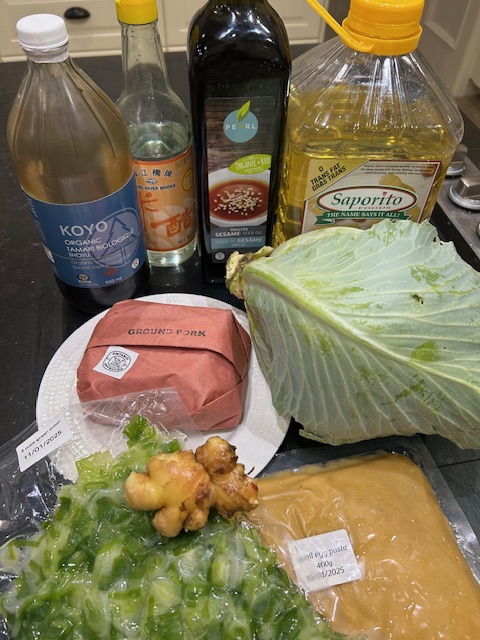
Ingredients
For Pork and Cabbage Dumplings:
- *one pound ground pork
- *one pound finely chopped cabbage ( about 1/2 a head)
- *1″ ginger, grated on microplane
- *2 cloves of garlic
- ~1/4 cup finely chopped green onion, fresh or frozen
- From your pantry: salt, pepper,soy sauce, sugar, peanut or canola oil for frying, sesame oil and rice vinegar for dipping sauce, frozen home made egg pasta ( or store bought wonton wrappers
For Nacho Night:
- Leftover/extra dumpling mixture
- Spices: cumin, oregano, coriander, paprika, cayenne
- One bag of restaurant-style nacho chips
- Optional toppings: canned beans, finely sliced onions, olives, pickled peppers, *shredded cheese (anything in your fridge or cupboard that would taste good on nachos!)
- Optional dips: *salsa, guacamole, sour cream or creme fraiche
For Pesto Pasta Night:
- Pasta scraps, roughly chopped (leftover from dumpling making)
- *Frozen pesto
Optional garnishes:
- Chopped herbs
- Grated Parmesan or other hard cheese
*Harmony Farm products
Equipment
- Cutting board
- Chef’s knife
- Microplane or other small grater
- Dumpling folder (optional)
- Cookie cutter (or cut to size with scissors) if you are using home made rolled pasta
- Spray bottle or basting brush for water (optional)
- Cast iron or carbon steel skillet (or other non stick skillet) with a tight fitting lid
- Sheet pan and parchment paper
- Pasta night: large pot and colander (built in or separate)
Method
Dumplings:
Start by defrosting the ground pork, either in the fridge overnight or in the microwave. If you are using the microwave, watch closely so that the meat does not start to cook. It will be better for the finished texture to start slightly frozen than slightly cooked.
If you are using frozen home made pasta for your dumpling wrappers, leave it in a sink of cold water to thaw while you start to prep your veggies. Once the pasta is thawed, roll to the thinnest setting of your roller and cut to the size of your dumpling folder.

For the veggies, first core and very finely shred then chop the cabbage. Toss it with 2 tsp of salt and leave it to brine while you prep everything else.
Next, finely chop the green onion and grate the garlic and ginger.
This is a good time to prep your dumpling-making station (to give your cabbage a bit more time to brine).
Gather together a parchment-lined sheet pan, clean dishcloths or paper towels (to keep hands clean), a teaspoon or dough scoop for filling, a dumpling folder and a spray bottle filled with cold water.
Next, place the salted cabbage on a clean cloth and wring as much liquid out as possible.
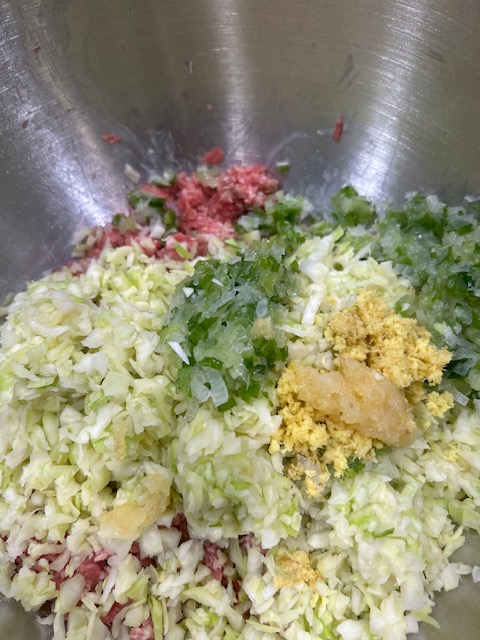
Then mix together pork, cabbage, ginger, garlic, 1 tsp each of salt and pepper, 2 tsp of sugar and a tablespoon of soy sauce.
For the next step, you will want to remove your jewellery!
Using clean hands, fold and knead the mixture until it looks and feels like dough. This only takes a few minutes.
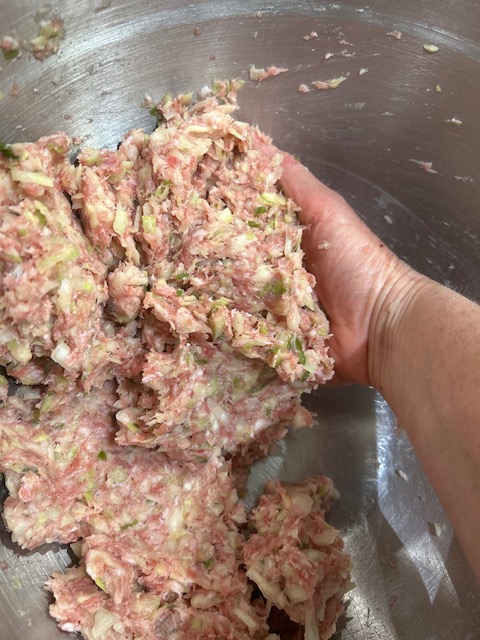

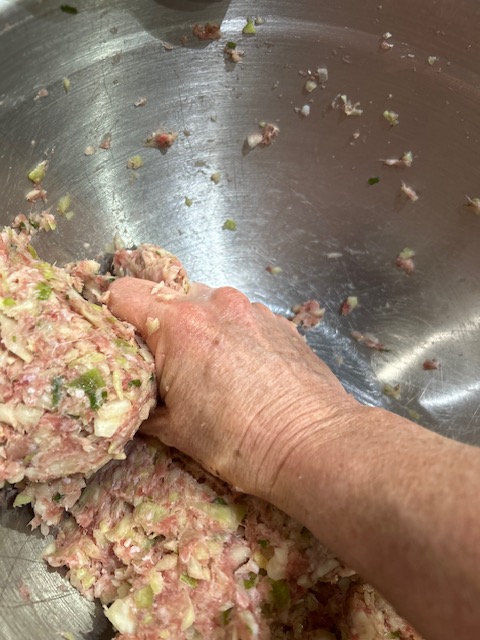
To check the seasoning, take a very small pinch of mixture and microwave it for 10 seconds to cook it through. Taste it and adjust the seasoning to your liking.
Now you are ready to fill and fold. For each dumpling, gently moisten the wrapper. You can use a moistened finger, a basting brush, or a fine mist spray bottle. Using a spray bottle is the easiest method.
Add a flattened disc of filling (just large enough to fill your dumpling without breaking the seal). Fold to seal and place finished dumplings on sheet pan.

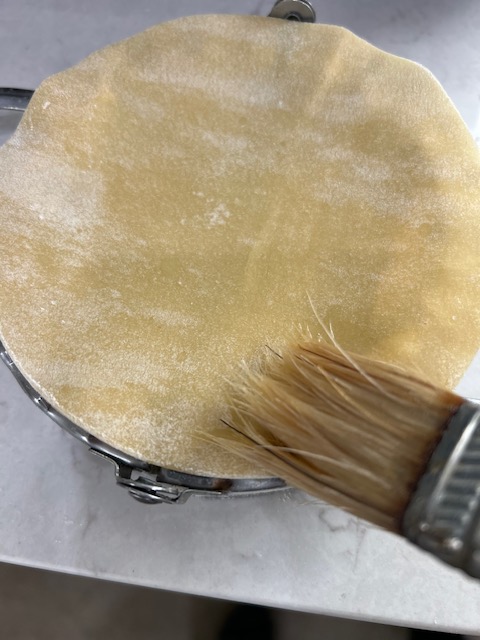
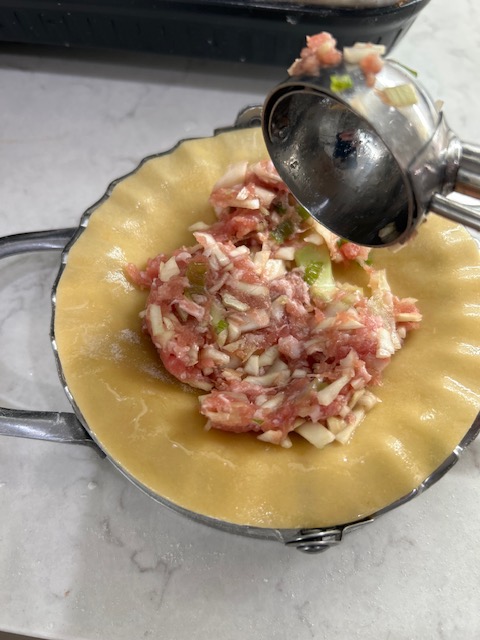
Dumplings can be cooked right away. Alternatively, freeze them on the sheet pan for an hour or two (until solid). Then, keep them in the freezer in a zip lock bag. This way, you can cook them from frozen later.
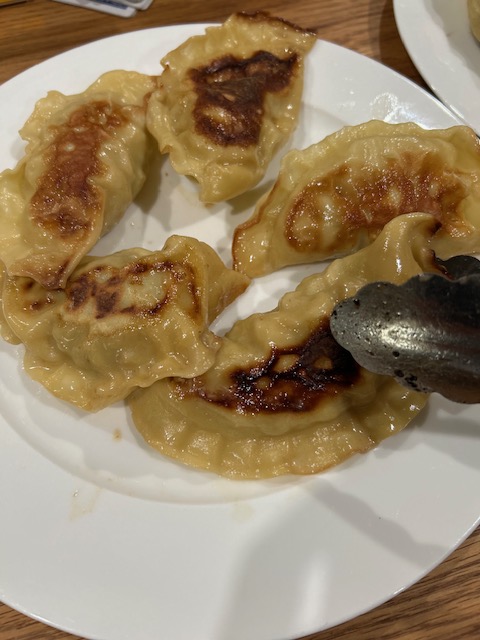
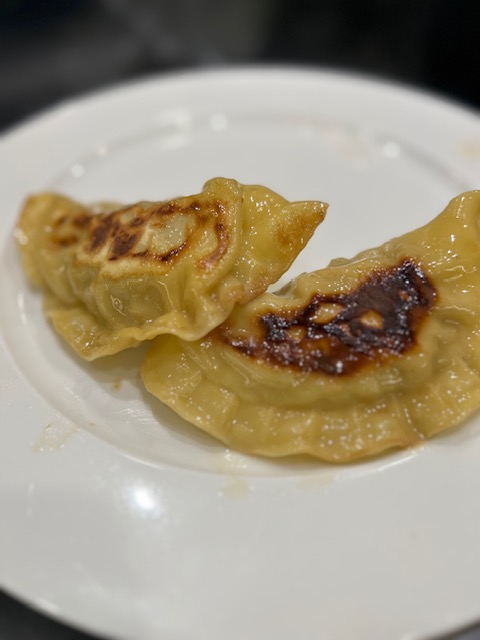
To cook, heat a non-stick skillet, coated with oil, to medium. Add dumplings and cook for a few minutes, swirling the pan to prevent sticking, until lightly cooked on the bottom. Then turn the heat up to medium-high, add 1/2 cup of water and cover. Steam for 3 minutes (if fresh) or 5 minutes (if frozen) then remove the cover and allow the water to evaporate and the bottoms to form a gorgeously golden crust. Serve right away with hot sauce and a dip made from one part each of soy sauce and rice vinegar and a splash of sesame oil.
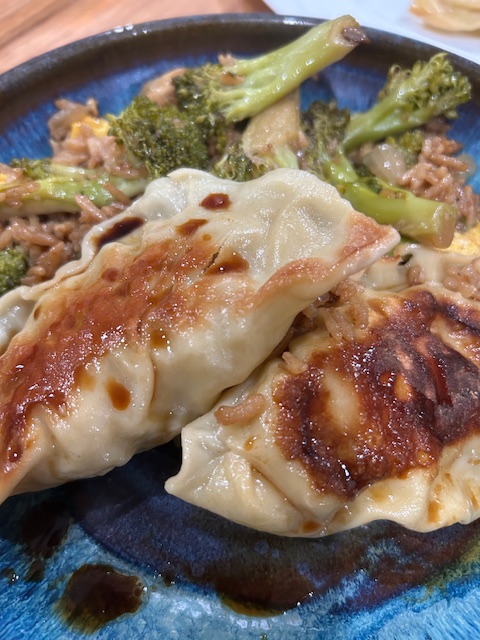
Time Savers, Storage Tips and Spin off Recipes
- This recipe makes a LOT of dumplings, about 50 if you use small won ton wrappers.
- If you like, go ahead and make them all up and freeze them for easy future dumpling nights
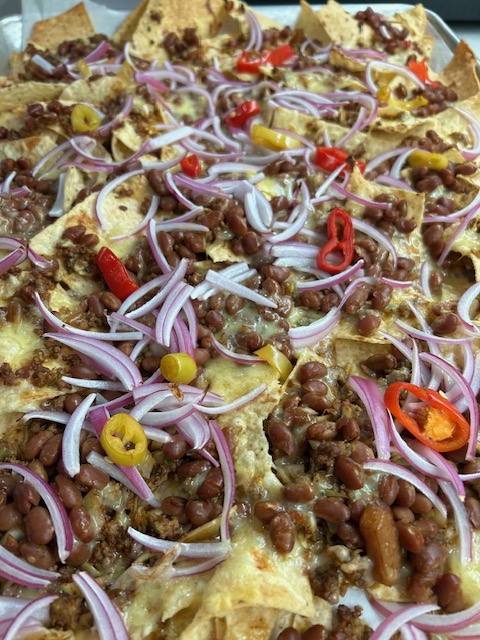
- If you manage to save some of the dumpling mix (or purposefully make a double batch!), it makes a great nacho topping. Simply fry the leftover topping in some olive oil with some Mexican-inspired spices like cumin, coriander, oregano, cayenne and paprika. Top corn chips with this and other favourite toppings. Bake them on a parchment-lined sheet pan at 450 until the cheese is bubbling. Ensure the corn chips are getting crispy at the edges. Serve as is or with salsa, guac or creme fraiche
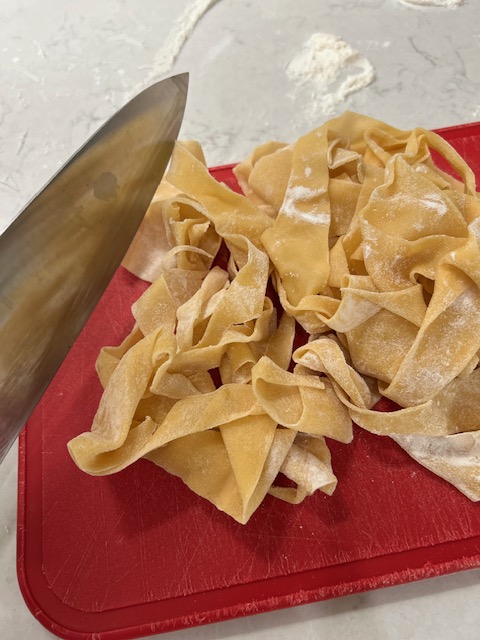
- Did you use frozen pasta to make your dumpling wrappers? The leftover odds and ends can be chopped and left to dry then stored in an airtight container. They make a great base for pesto pasta!
- What to do with the leftover 1/2 a cabbage? How about coleslaw or home made sauerkraut?

Did you Know?
Cabbage, an often overlooked vegetable, is a nutritional power house.
It is choc full of fiber, which feeds beneficial microbes and helps to maintain a healthy microbiome
It is also an important source of potassium and vitamins B9, C, and K.
It contains antioxidants which help to prevent and fight inflammation.
| This Recipe’s Plant Count: 10 |
| Time required: 30 minutes (if using store bought wonton wrappers)-60 minutes (if using home made pasta) |
| # Servings: 4-5 large servings or 10 accompaniments to another dish (try fried rice from your freezer!) |
 Harmony Kitchen