June 12, 2026 Recipe of the Week
This week I am infatuated with the gorgeous rainbow chard colours. They make any dish look so pretty and the multiple colours mean they have multiple polyphenols so your body will thank you for them.
Swiss chard can be used in any dish where you would normally use spinach or kale. Baby leaves can be used raw and larger leaves and stems are best gently cooked.
With awesome ingredients, simple cooking is often best. One of my favourite ways to prepare swiss chard is this simple saute, which can then be used in many different ways.
| Pantry items: – Extra virgin olive oil – Lemon – Salt and pepper |
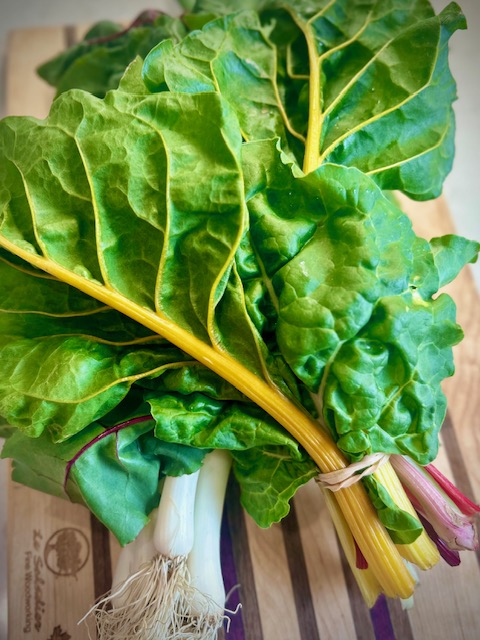
Included in your basket:
- Bunch of baby garlic
- Bunch of Rainbow Chard
Equipment:
- Chef knife and cutting board
- Skillet (preferably cast iron or carbon steel)
- Citrus juicer (or use a fork or brute force!)
Method
Start by removing any dry or bruised leaves from the veggies then giving them a good wash. Do not dry them as the residual water will help to steam the veggies.
Divide the swiss chard into stems and leaves. The quickest and easiest way to do this is to hold each leaf by the stem and gently pull down on the leaf to separate it from the spine in the middle.
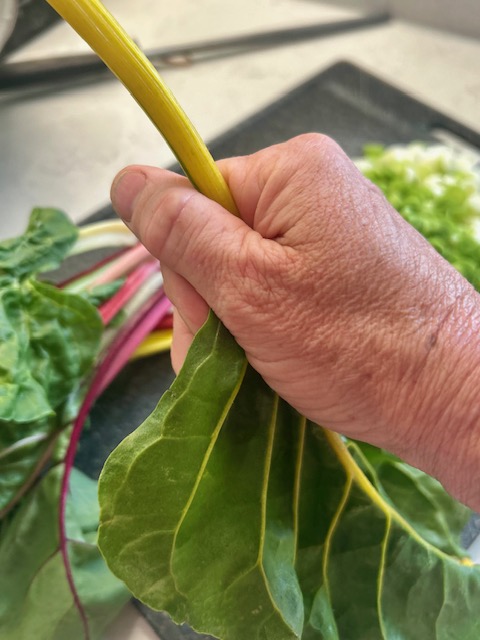
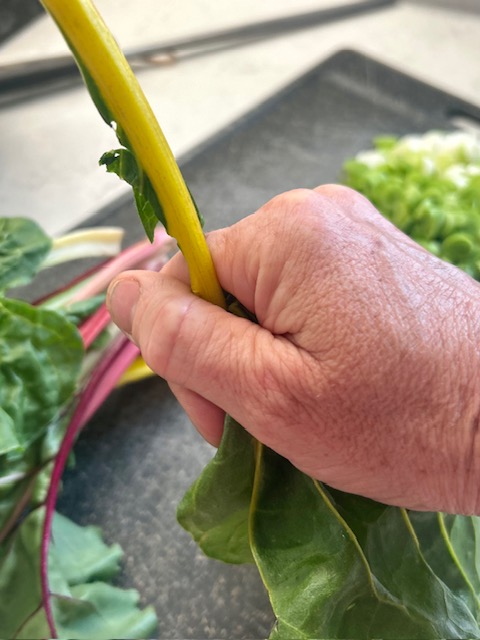
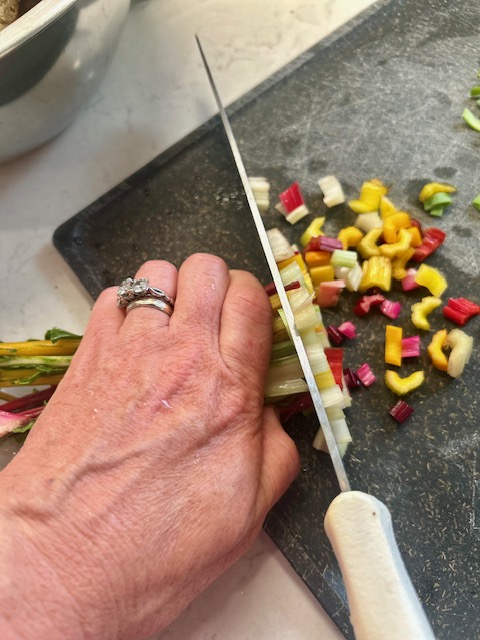
Cut stems into slices, as you would with celery stems.
Roughly chop leaves and keep separate.
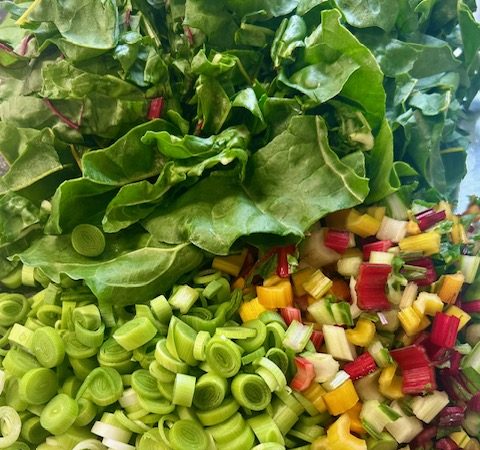
Finely slice all tender parts (white and green) of the baby garlic. Any tough parts can be saved with other veggie scraps in a container or ziplock in the freezer for making stock another day.
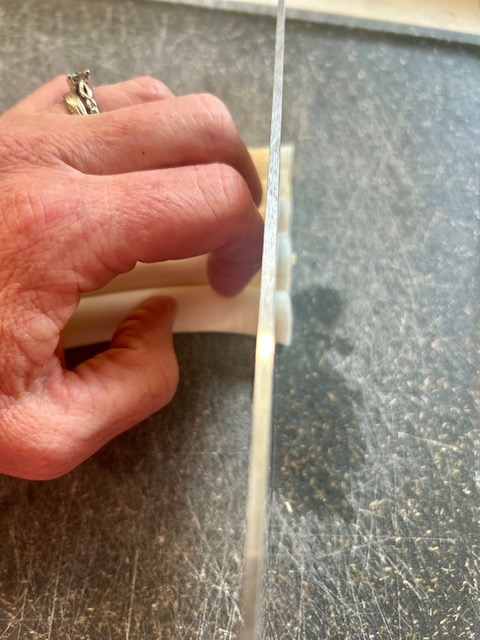
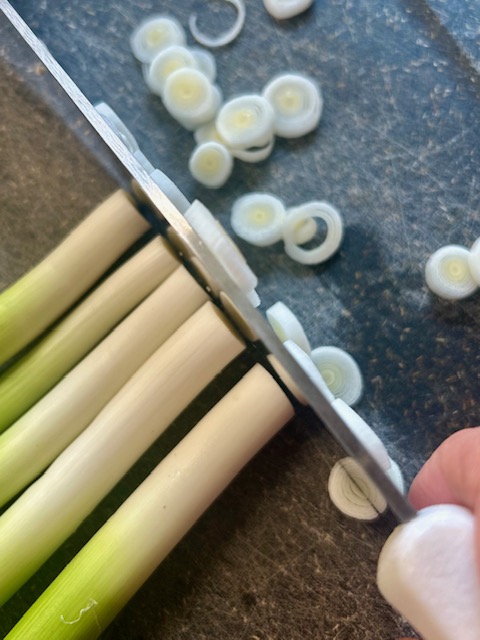
Add enough extra virgin olive oil to the skillet to coat the bottom, turn the heat to medium and allow the oil to heat until shimmering.
Add Swiss chard stems and sliced garlic first (they take longest to become tender). Add a few pinches of salt and pepper and more olive oil if needed to keep everything lightly coated. Stir to make sure everything is evenly heated and mixed then turn heat to low-medium and cover for 5-10 minutes to steam and soften.
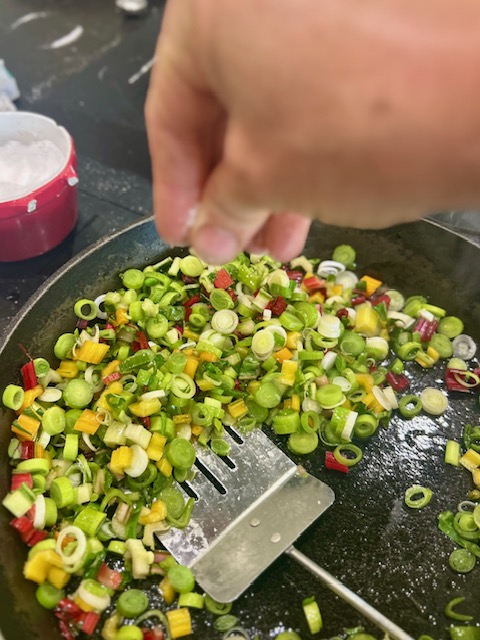
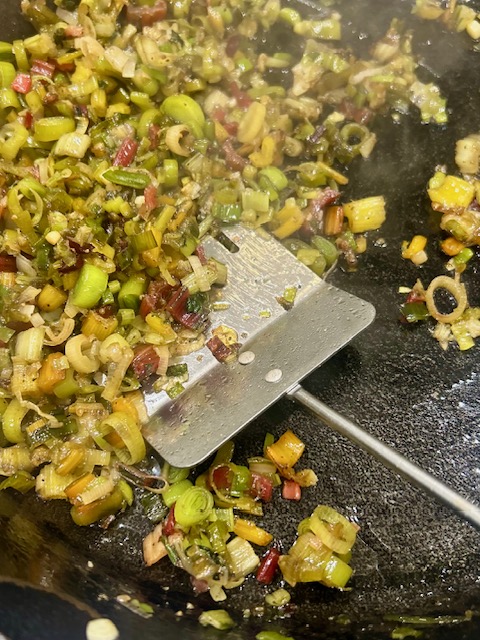
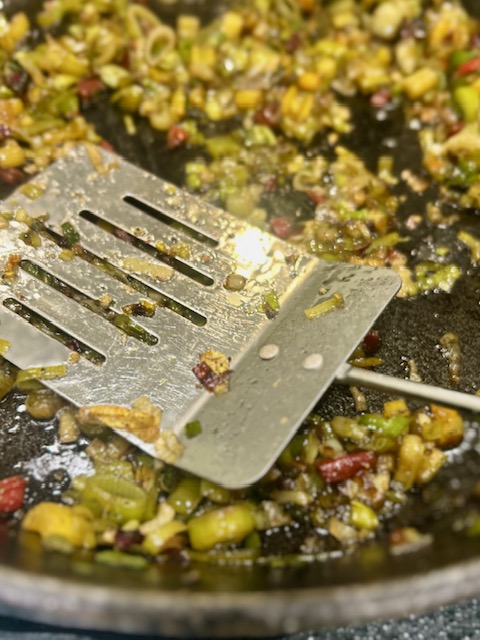
Once they have started to soften, remove the lid and turn the heat to medium. Stir and cook until lightly caramelized (5-6 minutes). Pressing the veggies to the pan for better contact will help to caramelize them a bit more quickly. Finally, add reserved greens and cook briefly until just wilted then remove from heat.
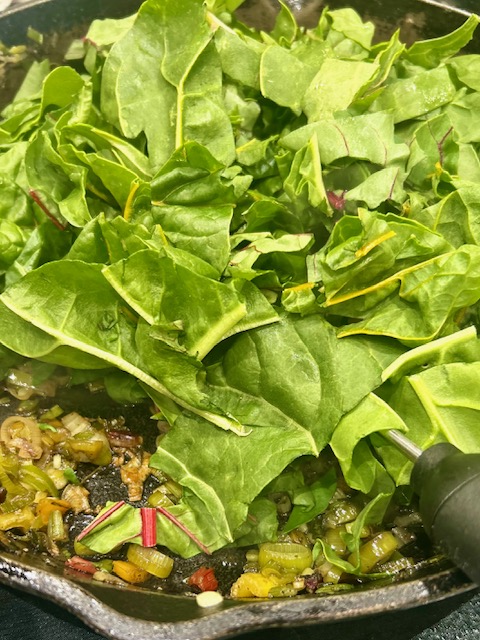
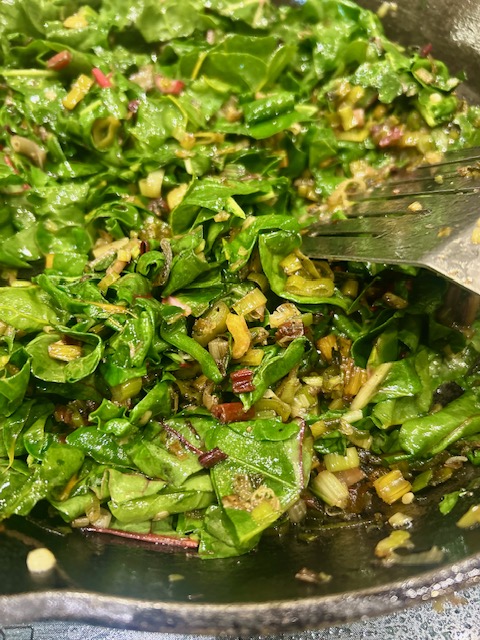
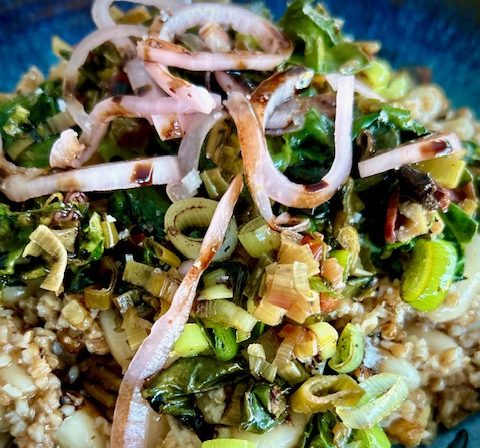
Taste and adjust seasoning with salt and pepper as needed. Finish with a squeeze of lemon and any fresh herbs you have on hand for a bit of extra plant power. Serve right away or save in a sealed container in the fridge to use later, warm or cold.
Time Savers, Storage Tips and Spin off Recipes
- Turn this simple dish into a meal by adding protein and starch/grain
- This can be a one-dish meal by mixing the greens with toasted nuts, feta cheese or a legume (beans / lentils) and serving over a grain such as cooked rice, quinoa or bulgur.
- Or serve as a side dish with a starch and animal protein (it is awesome with pork chops and rice or potatoes!).
- Save money on legumes by buying dried legumes in bulk and batch cooking weekly for a multitude of dishes
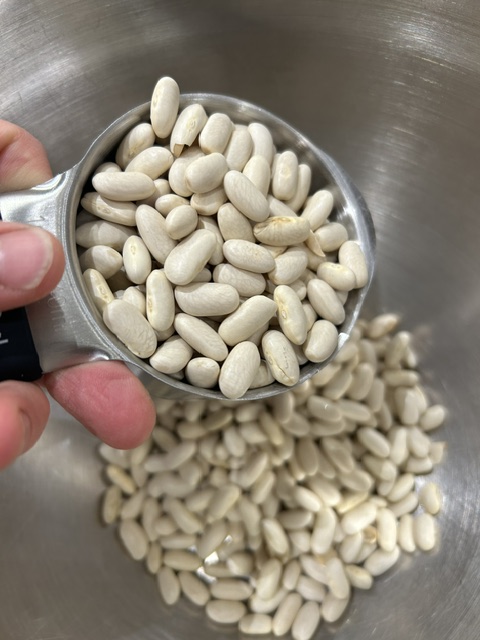
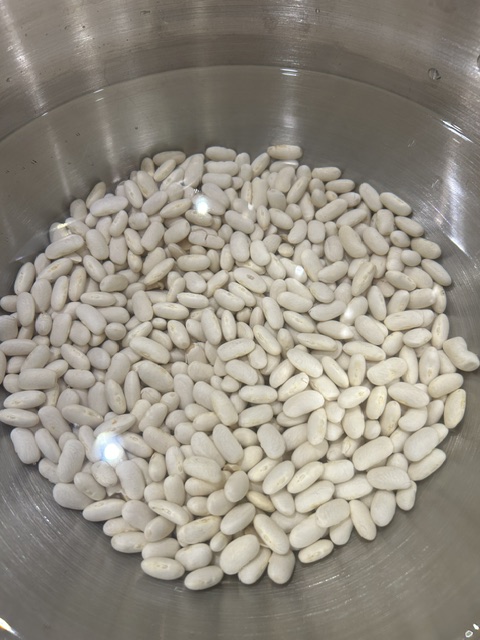
- Dried legumes will triple in bulk once soaked and cooked. Measure out the amount you would like the night before. Cover with 2-4 inches of water, cover and soak overnight. The next day, strain then add to a pot of water (cover by 2 inches). Leave water unsalted and season after cooking if you have soft water. If you have hard water, this will make it difficult for the legume to soften. You can create soft water by adding 3 tbsp salt to each gallon of cooking water.
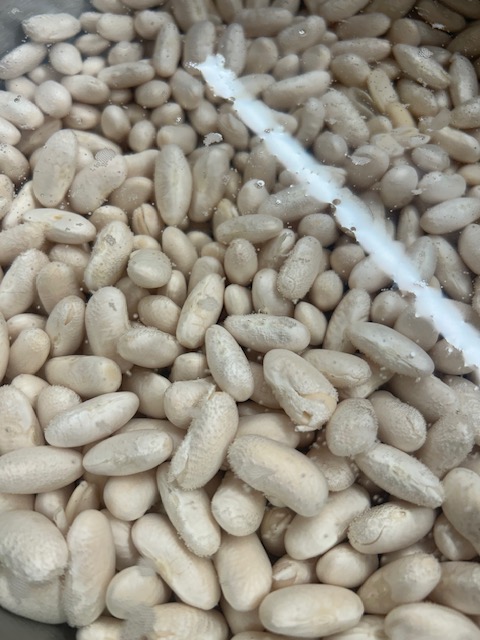
- If you have an instapot, you can set the pressure to high and time to 10 minutes then walk away. When the time is done, allow it to release pressure naturally for 10 minutes to avoid bursting the skins then test the beans to make sure they are tender. If not, add a bit more boiling water (if needed) and repeat the process until they are tender.
- No instapot? No problem! You can boil them on the stovetop as well. Bring to a boil over medium-high heat. Boil for 10 minutes then turn the heat down to a simmer and cook until tender. This can take between 15-90 minutes, depending on the legume. Just keep checking and remove from the heat when they have reached the texture you prefer.
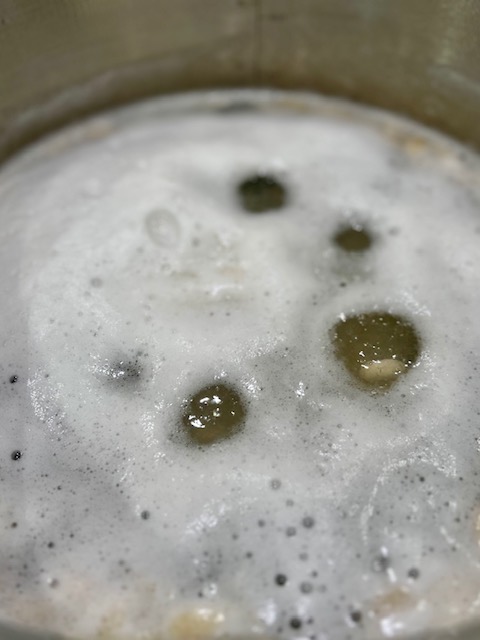
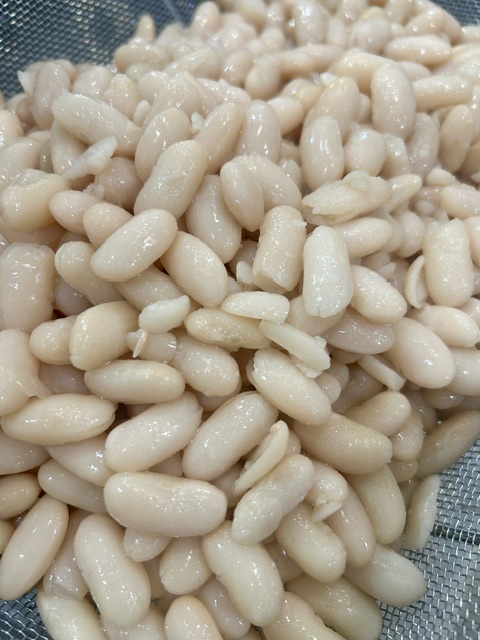
- Strain and enjoy right away or keep, covered in the fridge, for a week of low cost protein add-ins (salads, bowls, grain-and-legume main dishes).
- If you have any left at the end of the week, it makes a great bean dip. Just add garlic/garlic scape paste, lemon juice, salt and olive oil and blend until smooth. So good!
Did you Know?
Phytochemicals are one of the main things that gives plants their super powers.
These bioactive compounds have been developed by plants over many generations to protect themselves from pests, disease and environmental stress occurring in the environment around them. When we eat them, our bodies and microbiome benefit from the defenses they have developed.
There are thousands of different phytochemicals, each with their own unique properties. Some properties include being powerful antioxidants, being anti-inflammatory, and reducing risk of cardiovascular disease, diabetes and cancer. Which type of phytochemical is reflected by the colour of the plant. Eating one “superfood” will never provide you with all of these thousands of benefits but if you “eat the rainbow” you maximize your exposure to a variety of phytochemicals and all of the superpowers they possess.
| This Recipe’s Plant Count: 5 plus any added herbs/legumes or back-of-the-fridge add-ins |
| Time Required: 20-30 minutes for swiss chard saute |
| Servings: 4 as either a side dish or the veggie component of a one-dish meal |

