Oct 18, 2026 Recipe of the Week
I have fond memories of travelling in Greece. Moussaka is one of the flavours that comes to mind when I take a trip down memory lane.
I wanted to come up with a method for making moussaka that would allow me to throw this together on a weeknight after work. I tried many different versions and will include instructions that (almost) make this possible (with some advance prep and freezing) but ultimately I realized that this is simply a dish that takes time. And you can appreciate it with every bite. Moussaka is full of flavour. The fact that each component is specially prepared makes every bite worth slowly savouring.
| Pantry items: – Salt and pepper – Nutmeg, one cinnamon stick, one bay leaf, 5 whole cloves – 2/3 cup red wine – Extra virgin olive oil (amount will vary, but have 1L on hand just in case) – 3/4 cup all purpose flour – 8 tbsp (1/2c) butter – One cup parmesan cheese – Balsamic vinegar (optional, used with roasted eggplant version) – 3 tbsp tomato paste |
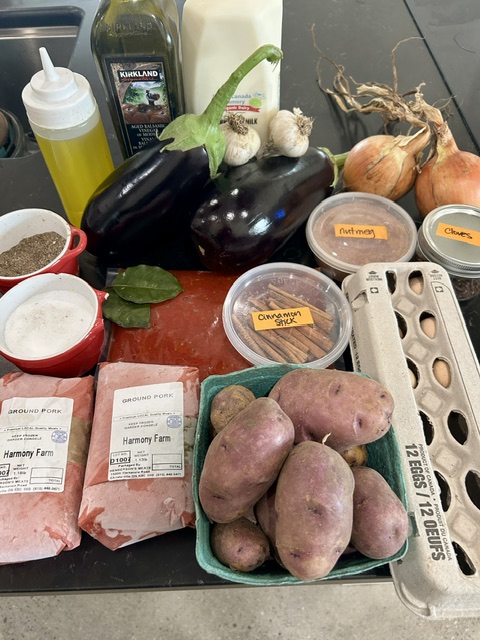
Included in your basket:
- 1 kg frozen heirloom tomato sauce
- 1 lb ground pork
- Fresh oregano and thyme
- Storage onions (you will need two for this recipe)
- 1 quart UCC milk
- One pound potatoes
- 2 medium-large eggplants
- One head garlic
Equipment:
- Knife and cutting board
- Large pot or dutch oven for meat sauce
- 2-3 medium pots for bechamel and frying veggies
- Sheet pan and parchment (optional, for roasted eggplant version)
- Cooling rack
- Paper towel
- Kitchen twine
- Whisk
- Silicone spatula
- Tongs +/-spider
- Metal or wooden spoon for mixing
- Digital instant read thermometer
- 9×13 oven proof baking dish
Method
There are four different layers in moussaka. Each can be partially or completely prepared in advance or you can prepare them all in the order below and then put the dish together in one fell swoop. As with most dishes, it doesn’t take much more time to double or triple the batch (ideas for bulk cooking in italics). The result is that you can prep and freeze the individual components (to make moussaka or so many other things!) or simply prep a few extra moussakas to pop in the oven another time.
Start by preparing the meat sauce. This takes the longest to cook down. There is no good substitution for slow cooking. It can be simmering away on the stove while you prep the other layers.
Thaw meat and tomato sauce.
Then brown the meat in 1-2 tbsp of olive oil. While this is cooking, peel and chop 2 medium onions and 2 -3 large cloves of garlic.
When there is no pink left in the meat, add the onions and garlic and cook until they have softened and become fragrant.
Add 3 tbsp of tomato paste, mix, then add 2/3 cup of red wine. Turn up the heat to bring to a boil then simmer until most of the wine has cooked down.
Then add tomato sauce and all of the herbs and spices (oregano, thyme, bay leaf, 5 whole cloves and one cinnamon stick). Oregano and thyme can be tied in a tight bundle with some kitchen twine to keep the woody stems from spreading throughout the sauce. Bring to a boil and then simmer as you prepare everything else, removing from the heat once the sauce has become quite thick.
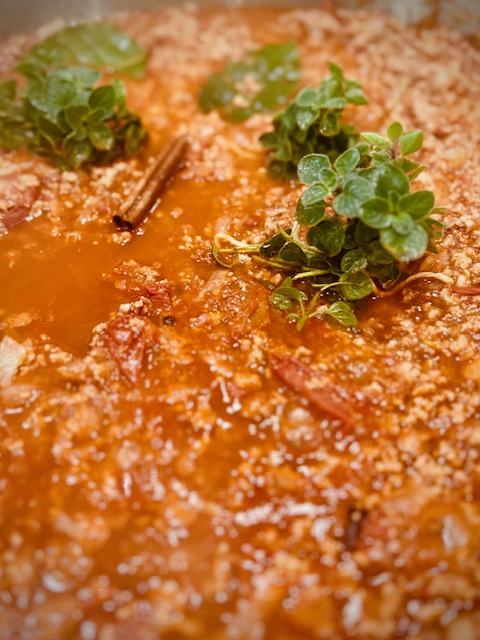
Meat sauce can easily be made in an extra large batch. If you have made extra for another day, allow it to cool and then divide it in flat pack freezer bags for easy thawing. One kg of finished sauce is a good size for a whole moussaka.
Next, start working on the veggies. I have made these various ways, trying to eliminate frying, but have to admit that frying is the most delicious version of this dish.
A runner up for eggplant is marinating cubes of eggplant in vinaigrette and roasting it in the oven. This has the advantage of being easy to batch cook and freeze and is very versatile to use in other dishes.
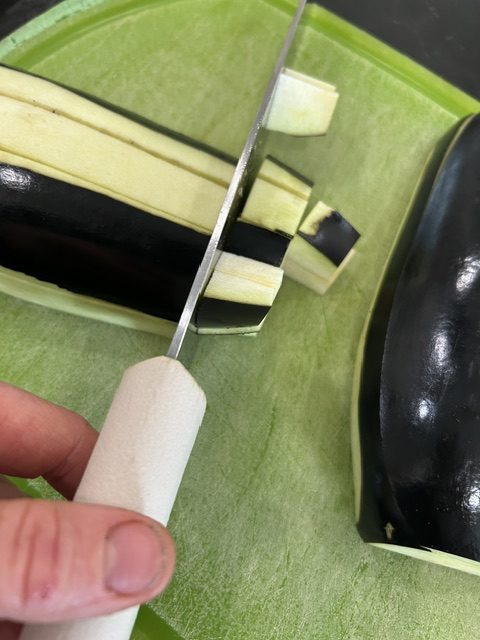
Either way, you will need two medium-large eggplants. Give them a wash, trim off the top and bottom and then peel some strips off of the skin (the skin is delicious and full of nutrients but leaving all of the skin can make it a bit tough; peeling about half of the skin off in strips is the best of both worlds).
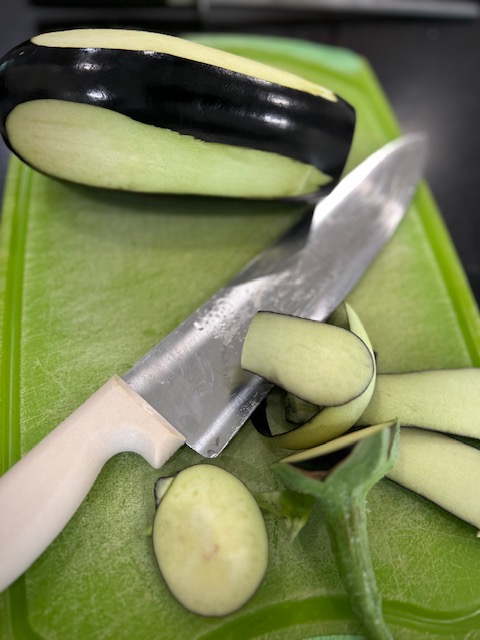
If you are going with the oven roasting route, cut the eggplant into planks and then into cubes (1.5cm) and toss them with about one tsp of salt and allow them to sweat for half an hour while you prep your potatoes and bechamel.
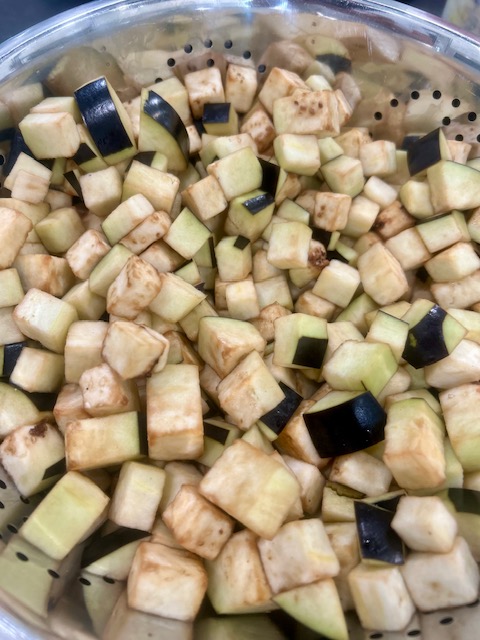
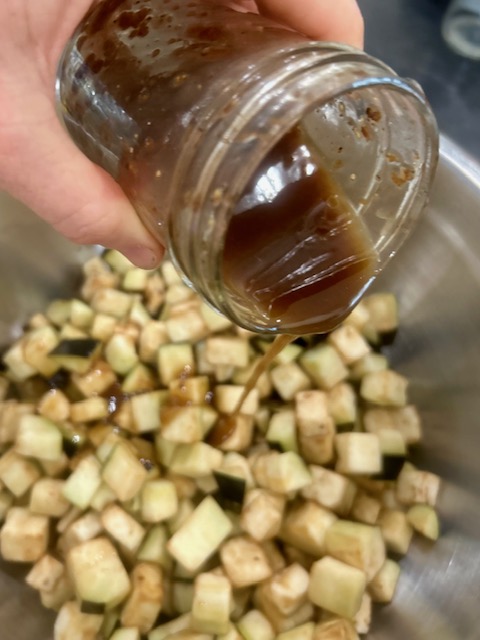
Set a timer for 30 minutes and turn the oven on to 375 degrees to preheat. After 30 minutes, without rinsing the salt, toss the cubes with a vinaigrette (made from 1/2 cup olive oil, 3 tbsp balsamic vinegar, a good pinch of pepper and one large clove of grated garlic) and again set a timer for 30 minutes.
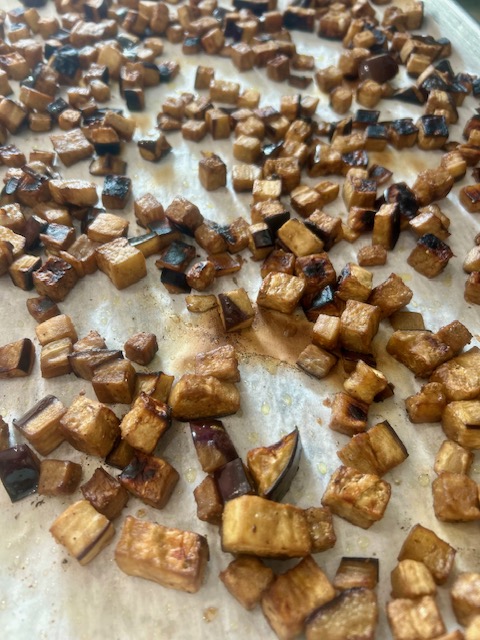
Then roast the cubes on a parchment-lined sheet pan at 375 for 30 minutes, turning after 15 minutes to ensure even cooking. Keep the oven on. It is the perfect temperature for your moussaka!
If you decide to fry your eggplant, rather than cubing, cut the eggplant into rounds, about 1.5cm thick and set aside.
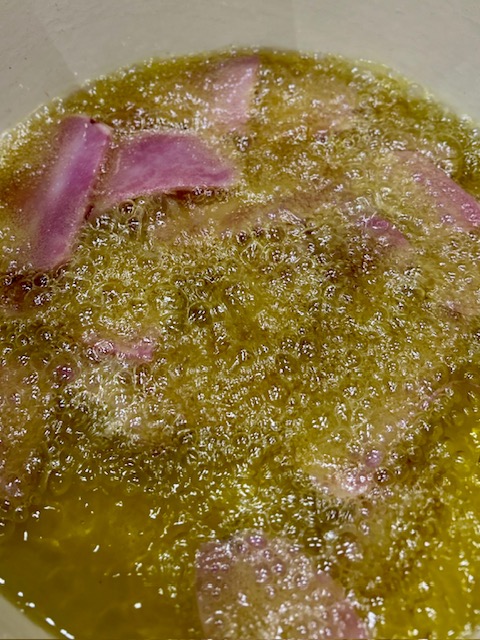
Pour ~5 cm of olive oil in a dutch oven or other medium sized pot on medium-high heat and allow it to reach 350-375 degrees F. Peel and slice your potatoes in thin slices, about 1/2 cm. Place them in cold water while you are slicing to remove some of the starch then place them between clean towels to blot them dry before frying.
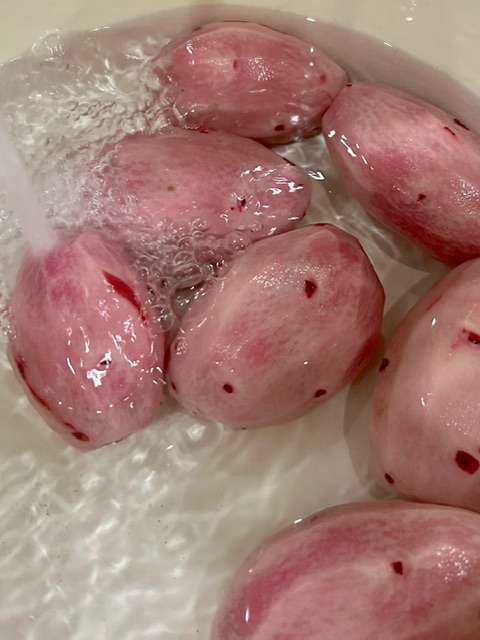
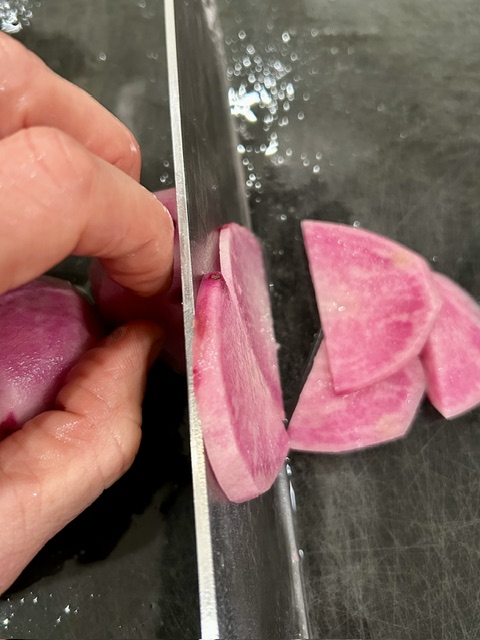
Set up a work station close to your dutch oven with a cooling rack lined with paper towels, a salt celler or shaker and a 9×13 pan to begin layering as the veggies are ready.
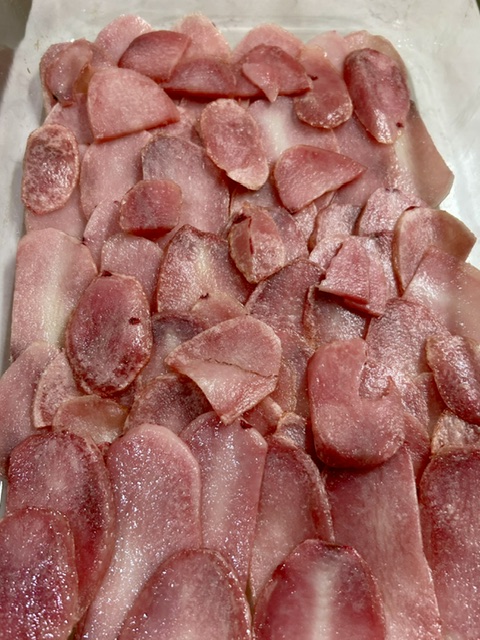
Once the oil has come to temperature, begin frying the potatoes, a few at a time, so that the temperature does not drop too much and the potatoes are not overly crowded. Once they look lighty golden on one side, turn them with tongs and allow them to cook on the second side, then remove them to the paper towel (with tongs or a spider) to absorb extra oil. Sprinkle them with some salt. Start covering the bottom of the 9×13 pan when they are cool enough to touch.
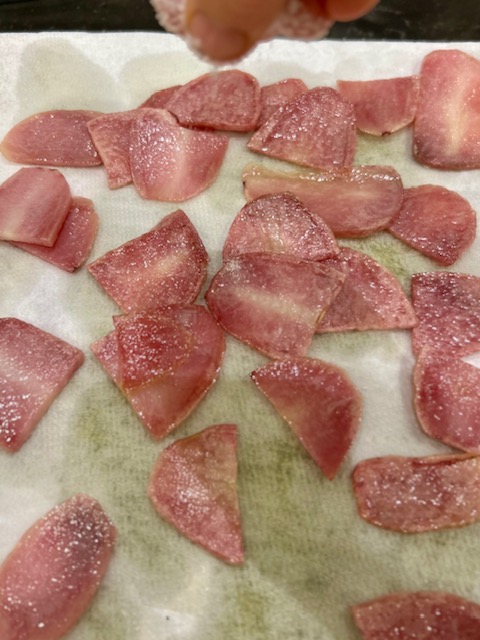
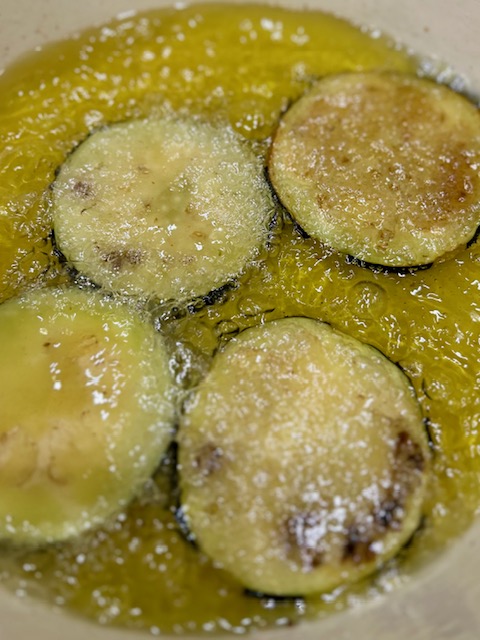
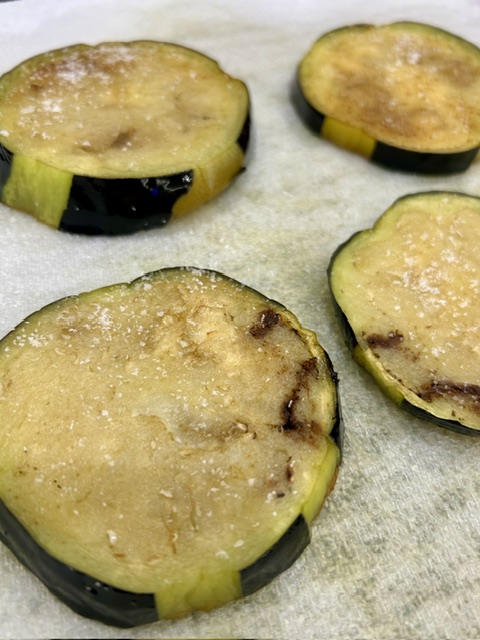
If you are also frying eggplant, begin adding this to the hot oil once the bottom of the pan is lined with potatoes. Make sure the oil stays between 350-375 and top the oil up as needed to keep the eggplant covered (eggplant can absorb a lot of oil). Again, flip the eggplant when it is golden on one side and remove to paper towels when both sides are done. Sprinkle with salt and layer on top of the potatoes.
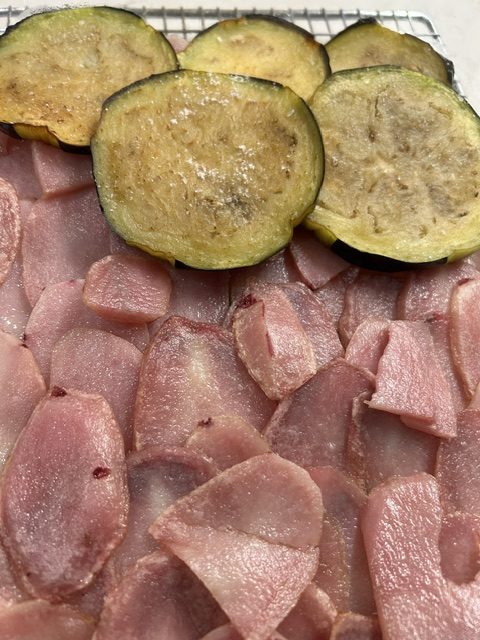
Alternatively, cover the fried potatoes with a layer of cubed and roasted eggplant if you decided to roast instead of fry the eggplant. If you have made a double or triple batch, allow the remainder of the eggplant to cool then portion it and freeze in airtight containers or freezer bags.
If your meat sauce has fully thickened, you can remove the whole herbs and spices and add a layer on top of the eggplant now. If there is still some liquid, it can continue to simmer while you prepare the bechamel sauce then add at the last minute.
Moussaka bechamel is extra thick and luxurious. It needs to stand up tall and not sink into the other layers so it has a higher ratio of flour:milk than standard bechamel. Bechamel is easy to make but also easy to mess up if you do not have everything prepared in advance. There are a few critical moments where things progress quickly. Measure your ingredients and have a whisk and a silicone spatula ready before you start.
First put one quart of milk and a 1/2 tsp of salt in a sauce pan on medium heat so that it can come almost to a boil while you prepare your roux (flour and butter). Keep a close eye on the milk and turn down the heat if it starts to bubble as it can quickly bubble over.
In a separate medium-sized pot or dutch oven, melt 8 tbsp of butter and mix with 3/4 cup of all purpose flour. Stir over medium heat until it starts to bubble then continue to cook, stiring constantly, for about two minutes, until it no longer smells like raw flour (it will smell a bit like a cooking crepe).
Remove from the heat, grab your whisk, and add the hot milk, all at once, whisking rapidly until it is fully mixed in.
Place back on medium-high heat and, stirring constantly, bring back to a boil for one minute until the sauce becomes quite thick. Remove from heat, add 1/2 cup of grated parmesan or peccorino and stir until melted. Add salt, pepper and a pinch of nutmeg to taste.
Separate 4 egg yolks and beat them together. They will be added to the bechamel for added richness but will need to be tempered first (adding liquid slowly to keep the proteins from clumping together like in scrambled eggs).
To do this, place the yolk bowl on top of a damp towel to keep it from moving. Then very slowly add a few drops of bechamel to the egg yolks, while whisking them constantly. Keep adding bechamel very slowly while whisking until you have added ~1 1/2 cups of hot liquid. At this point, the yolks are tempered and are safe to add to the bechamel. Pour them in and stir to mix then pour all of the sauce on top of the meat sauce layer.
***Bechamel sauce can also be made in a large batch to freeze for later. Use a wide rather than tall pan for large batches so that there is more surface area in contact with the heat source. Place a piece of parchment on top of the bechamel in your freezer container to keep it from forming a skin on the top.***
Sprinkle the top of the finished moussaka with 1/4-1/2 cup parmesan or peccorino before placing in the oven. Place the baking dish on a parchment-lined sheet pan to save your oven floor from inevitable drips.
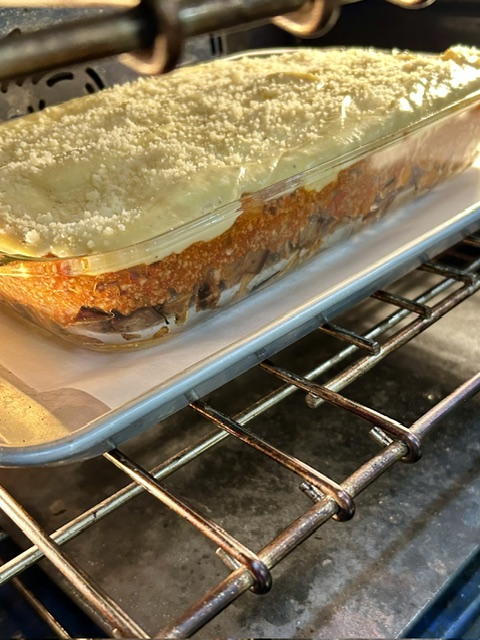
Bake at 375 for 50 minutes, turning mid way for even browning.
When it has golden brown patches all over, it is ready to come out. Here is the hard part: It needs to sit for about 30 minutes to set before it can safely be cut, a perfect time to have a beautiful salad while you wait:).
Time Savers, Storage Tips and Spin off Recipes
- Extra fully prepped moussakas can be re-heated from frozen by baking, uncovered, for 45-50 minutes at 375 degrees or until reaching a temperature of 165 degrees in the center of the dish.
- Frozen bechamel sauce is great in homemade mac and cheese, on crepes, croque monsieur sandwiches or as a base layer in pizza.
- Extra meat sauce can be used as pasta sauce, on pizza or as moussaka-style sloppy joes
- Frozen eggplant can be used to make eggplant parm, as a pizza topping or as an extra special addition to pasta sauce.
Did you Know?
Herbs and spices are amoung the most concentrated sources of phytochemicals.
Plants tend to concentrate their defense systems (phytochemicals) in the tips of their leaves and the seeds they create as these tissues are more vulnerable to attack/critical for reproduction.
Using these parts of the plant gives intense flavour and nutritional benefits.
| This Recipe’s Plant Count: 13-14 depending on which eggplant version is used |
| Time Required: 3-4 hours (so you might as well make extra!) |
| Servings: 10 |

